
I Keep Coming Back to What We Choose to Pay For
- Lindsey Wahlstrom
- Mar 27
- 3 min read

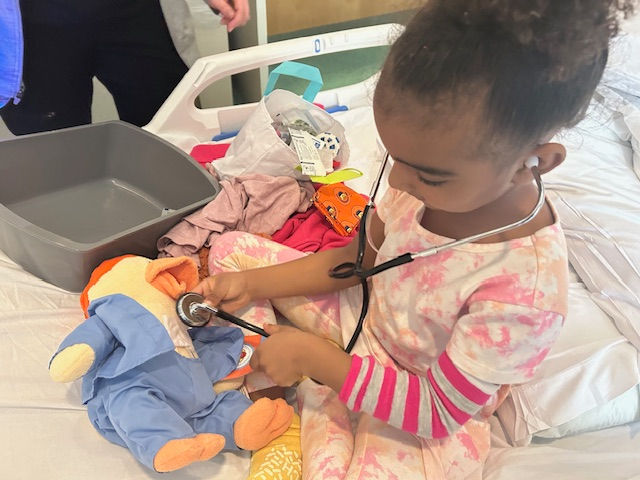
I’ve spent the month posting content about play in pediatric care. It’s Child Life Month, so it made sense to focus on the topic. But as the month winds down, I want to make the case for why every month should be Child Life Month.
Rona’s FUN LAB is about something much bigger than me, or Rona, or our n of 1 story. It’s about bringing to light the importance of rethinking how we deliver care at a system’s level.
As Aaron Horowitz so beautifully put it: Play is the language of the child. Children in healthcare settings require play to process the things that are happening to them, to make sense of an unfamiliar environment, and to signal to the adults around them how and where they are struggling.
Toys like Empath Lab’s companions and the medical toys that The Butterfly Pig produce are critical aspects of care. They are, as Mary indicated, preventative treatment for known trauma-related outcomes children navigating complex illness experience.
And yet, they are not covered by insurance. Hospitals foot the bill, which means in general these positions are woefully underfunded and understaffed.
Here’s why that’s missing the mark.
Research examining children’s participation in healthcare decisions shows that while children often cannot refuse life-saving treatment, they can be given “small decisions” about how care is delivered, choices that help them feel more in control and build trust with clinicians (Coyne et al., Journal of Clinical Nursing).
Therapeutic play provides exactly that kind of agency.
Through play, children can:
explore medical equipment in a non-threatening way
rehearse procedures before they occur
express emotions that may be difficult to articulate
regain a sense of predictability in an unfamiliar environment
Over the past two decades, research across pediatric nursing, psychology, and child-life practice has consistently demonstrated that therapeutic play improves children’s experiences during hospitalization.
A randomized controlled trial examining therapeutic play before surgery found that children who received play-based preparation experienced lower anxiety and improved emotional outcomes compared with children who received standard preparation (Li & Lopez, Journal for Specialists in Pediatric Nursing, 2008).
Subsequent studies and systematic reviews confirm similar findings.
Research shows that therapeutic play interventions:
reduce anxiety and negative emotional responses in hospitalized children (Li et al., Journal of Pediatric Psychology, 2016)
improve behavior and coping during invasive procedures (Silva et al., Journal of Pediatrics, 2017)
reduce postoperative pain, anxiety, and negative behaviors during hospital stays (Godino-Iáñez et al., Healthcare, 2020)
reduce anxiety and emotional distress during hospitalization for children ages 3–10 (Abdi et al., BMC Complementary Medicine and Therapies, 2025)
improve pain, stress, and emotional outcomes across pediatric hospital settings (Gjærde et al., BMJ Open, 2021)
A meta-analysis examining therapeutic play interventions before procedures similarly found consistent reductions in perioperative anxiety and postoperative pain in children receiving play-based preparation (He et al., Pain Management Nursing, 2015).
Taken together, the evidence is remarkably consistent: Therapeutic play improves how children experience medical care. It isn’t just about understanding, it is about coping.
Extended hospitalizations are frequently associated with psychological stress and trauma for children and families, which is why interventions that support coping and emotional processing matter.
We have built a system that reliably pays for sedation, intubation, and anti-anxiety medications in children. There are clear billing pathways, and those interventions fit neatly into how healthcare is funded.
So why don’t we have the same pathways for the things that make care make sense for children?
References
Coyne I, Amory A, Gibson F, Kiernan G. Children’s participation in shared decision-making: Children, adolescents, parents and healthcare professionals’ perspectives and experiences. Journal of Clinical Nursing.
Li HCW, Lopez V. Effectiveness and appropriateness of therapeutic play intervention in preparing children for surgery: A randomized controlled trial study. Journal for Specialists in Pediatric Nursing. 2008;13(2):63–73.
Li WHC, Chung JOK, Ho KY, Kwok BMC. Play interventions to reduce anxiety and negative emotions in hospitalized children. Journal of Pediatric Psychology. 2016.
Silva RD, Austregésilo SC, Ithamar L, Lima LS. Therapeutic play to prepare children for invasive procedures: A systematic review. Journal of Pediatrics (Rio J). 2017;93(1):6–16.
Godino-Iáñez MJ, et al. Play therapy as an intervention in hospitalized children: A systematic review. Healthcare. 2020.
Abdi F, et al. Effect of play therapy and storytelling on anxiety in hospitalized children. BMC Complementary Medicine and Therapies. 2025.
Gjærde LK, et al. Play interventions for paediatric patients in hospital: A systematic review. BMJ Open. 2021;11:e051957.
He HG, Zhu L, Chan SWC, Liam JLW, Li HCW, Ko SS. Effectiveness of therapeutic play interventions in reducing perioperative anxiety in children: A systematic review. Pain Management Nursing. 2015.


Comments